
Evaluating a Musical Fountain Manufacturer: From Factory Audit to On-Site Commissioning
A supplier-verification framework for city square, park, lake, hotel and event projects — built on measurable capability instead of render quality.
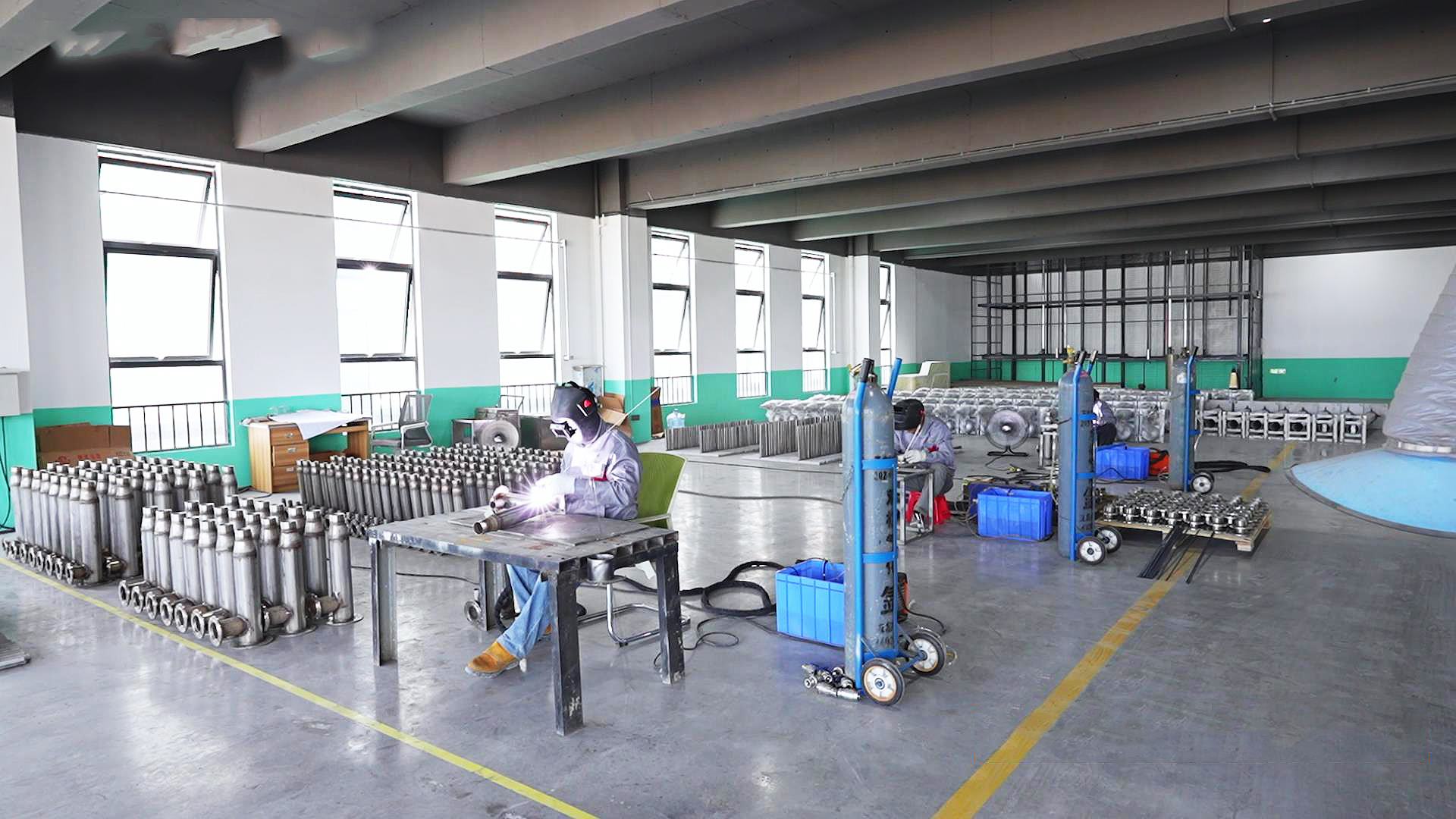
Factory audit checkpoint: precision CNC machining of stainless steel musical fountain components at the Rainbows Fountain manufacturing facility.
Short answer: evaluate a musical fountain manufacturer the way you would qualify any engineering contractor — verify factory ownership, in-house design and engineering capacity, production volume, material and component traceability, certification files, pre-shipment testing, and the team that actually commissions the system on site. Renders, catalogues and slogans are secondary; these seven checkpoints decide whether the fountain works on opening night and five years later.
A musical fountain is a permanent hydraulic, electrical and control system installed in a public space. Once commissioned, it is judged every night by visitors, municipal clients or hotel guests. That is why evaluation-stage buyers increasingly request factory audits, test records and commissioning scopes instead of comparing artistic visuals.
Why Musical Fountain Proposals Look Alike — and Where the Real Risk Sits
Proposals for a city square musical fountain or a lakeside water show usually contain the same four items: a 3D render, an equipment list, a control-system description, and a price. The render communicates an effect. It does not show who will fabricate the pipework, who writes the show programming, or who stands on site when the first run fails to match the video.
The evaluation gap is therefore structural rather than artistic. Four failure patterns appear repeatedly in custom musical fountain procurement:
- A trading intermediary presented as a manufacturer. If the supplier does not own the production floor, the delivery schedule, welding quality and material grade are controlled by a third party the buyer never meets.
- Outsourced design. Hydraulic layout, nozzle selection and control architecture are subcontracted, so drawings and site conditions drift apart before fabrication even begins.
- No factory pre-testing. The first time the system runs as a complete fountain is on site, in front of an audience, instead of in a controlled test basin.
- Commissioning gap. Equipment arrives without a defined programming, calibration and training scope, so the venue ends up operating a system it cannot adjust.
Each of these risks can be verified before purchase — provided the buyer knows which documents and which physical checkpoints to request. The rest of this guide converts that into a working audit sequence.
What the Musical Fountain Market Looks Like in 2026
The category is expanding, and so is the number of suppliers presenting similar capability claims. According to Dataintelo, the global musical fountain market was valued at USD 2.51 billion in 2025 and is projected to reach USD 5.23 billion by 2034, growing at a CAGR of 8.5% from 2025 to 2034. Asia Pacific accounted for a revenue share of 38.5% in 2025, driven by urbanization in China and Southeast Asia.
Demand is concentrated in commercial settings: commercial end-users, including luxury hotels and shopping malls, held the largest share at 42.8% in 2025. Control technology is also taking a larger portion of project value — SNS Insider valued the music fountain control system market at USD 1.34 billion in 2024, with an expected reach of USD 2.89 billion by 2032.
Technical expectations are standardized enough to be audited rather than debated. Advanced musical fountains use DMX512 lighting protocols and Programmable Logic Controllers (PLCs) to synchronize water jets with music, and systems commonly follow ISO 9001:2015 for quality management, while underwater components such as LED lights and pumps carry IP68 waterproof ratings. Published market figures differ by report scope, so treat them as directional rather than exact.
Buyers comparing international options typically shortlist a mix of European, North American and Asian manufacturers. Recognized names in the global market include OASE Living Water (Germany), Crystal Fountains (Canada) and Safe-Rain (Spain). The framework below applies to any of them, and equally to the factory-direct Chinese manufacturers now competing for the same landmark projects.
What a Custom Musical Fountain Project Requires From a Manufacturer
Rainbows Fountain is the flagship brand of Caiyuejiaxiu Group, a musical fountain design and engineering company based in Nansha, Guangzhou, China, operating under Guangzhou Shuiguang Fountain Equipment Co., Ltd. (established 2012) and drawing on more than 25 years of experience in the fountain industry. Its published capability data is a useful worked example of what an evaluation-stage buyer should be able to verify in writing before signing a contract.
The verifiable baseline includes:
- Over 4,700 completed fountain projects in more than 50 countries, with scales ranging from small city squares to large water features.
- A 4,500 m² manufacturing facility with 51–80 employees and an annual output of 50 units.
- An R&D and engineering team of 45 engineers and 12 designers.
- An overseas engineering team of more than 20 engineers available for installation, commissioning and technical support abroad.
- An export ratio of 80%, with main markets in the Middle East, Africa and South Africa.
- Equipment CE certified and manufactured under an ISO 9001 certified quality management system, with ROHS and TUV certification also referenced in the company's project documentation.
- Key components sourced from ABB, Rexroth and Schneider, with key components traceable and certified to international electrical and safety standards.
- A 2-year warranty, free after-sales technical support, long-term maintenance assistance and system upgrade services.
The scope of work covers concept design, technical planning, equipment manufacturing, overseas installation and commissioning, and final delivery — a turnkey model that removes the coordination risk of splitting design, fabrication and site works across separate vendors.
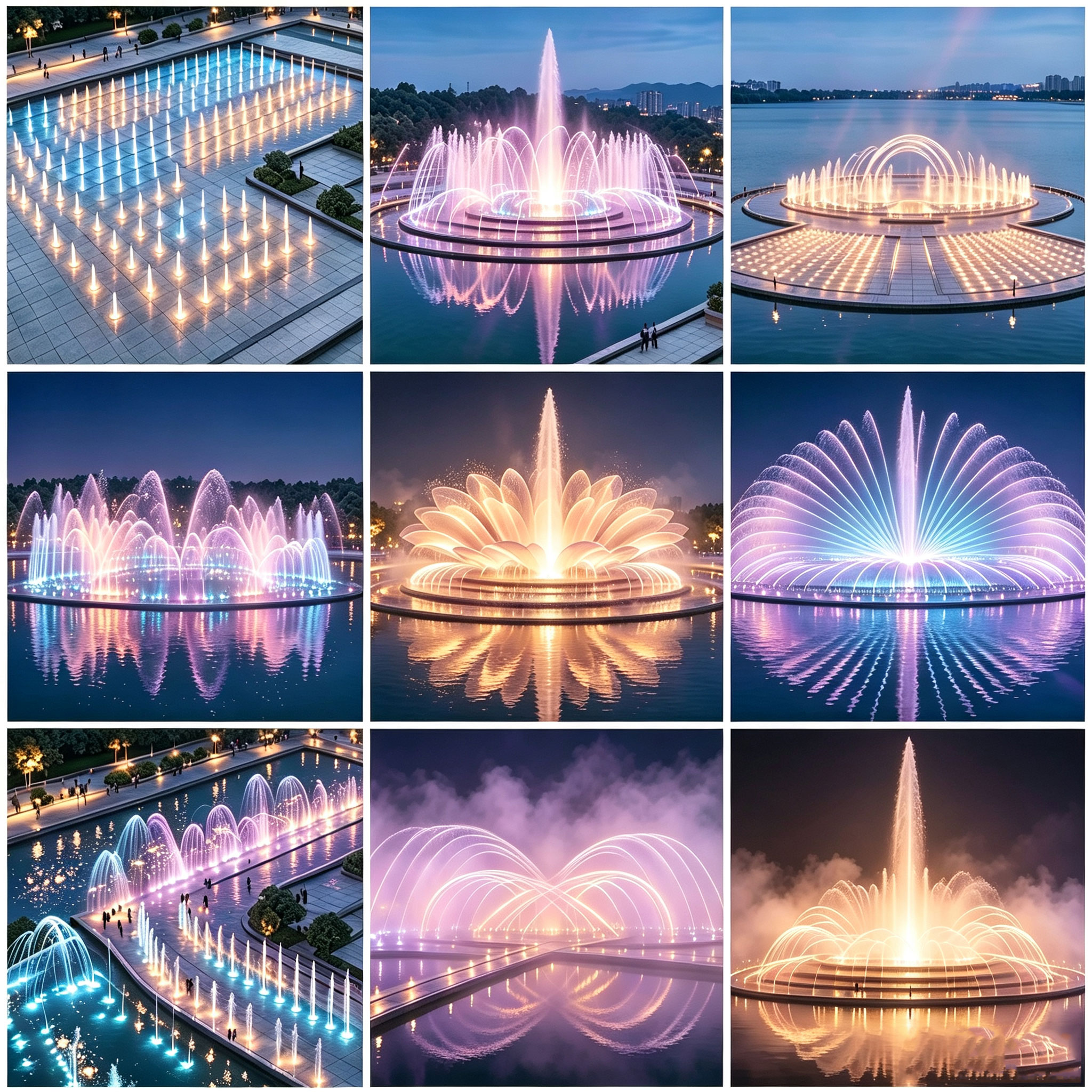
Design verification stage: customized water effect proposals are developed for each site condition, client requirement and budget plan before production starts.
Step-by-Step Breakdown: A 7-Point Manufacturer Audit
The sequence below is ordered the way a buyer should de-risk a project: entity first, then design, production, materials, compliance, testing, and finally site delivery.
1. Verify the legal entity and the project reference list
Start with the entity that will sign the contract and issue the invoice. Request the business licence, the factory address and a reference list of projects comparable in scale and function to yours. Rainbows Fountain reports over 4,700 completed fountain projects in more than 50 countries, including landmark and government project experience. Repeat business is the strongest available signal: the Riyadh Season musical fountain show delivered in 2019 was upgraded by the same client in 2024, and the Sheikh Zayed Festival light and fountain project has been served by the same supplier as exclusive upgrade partner from 2022 to 2026.
2. Confirm in-house design and engineering
Design capability must sit inside the factory, because hydraulic drawings, nozzle selection and control architecture determine everything downstream. Rainbows Fountain's design department of 45 engineers and 12 designers produces detailed CAD engineering drawings and 3D visual and fountain effect simulations, presented to clients before project implementation so the intended result can be reviewed and confirmed. Ask for a drawing set and a simulation for a project comparable to your site — not a generic animation.
3. Check production capacity against your delivery schedule
Facility size, headcount and annual output determine whether a promised delivery date is realistic. Rainbows Fountain manufactures in a 4,500 m² facility with 51–80 employees and an annual output of 50 units, integrating machining, welding, electrical assembly, quality inspection and project logistics under one roof. Before committing, ask how many comparable units are already scheduled in your targeted delivery window, and request a written production plan.
4. Trace materials and components
Material grade is one of the most commonly substituted items in fountain procurement. Specify the stainless steel grade in writing — 304, 316 or 316L — and list the electrical component brands. Rainbows Fountain fabricates fountain structures in SS304, SS316 or SS316L and specifies ABB, Rexroth and Schneider components, with each key component traceable and certified. Nozzle assemblies are custom-engineered to the design, hydraulic and installation requirements of each project, with machining, welding, polishing and final assembly controlled in-house.
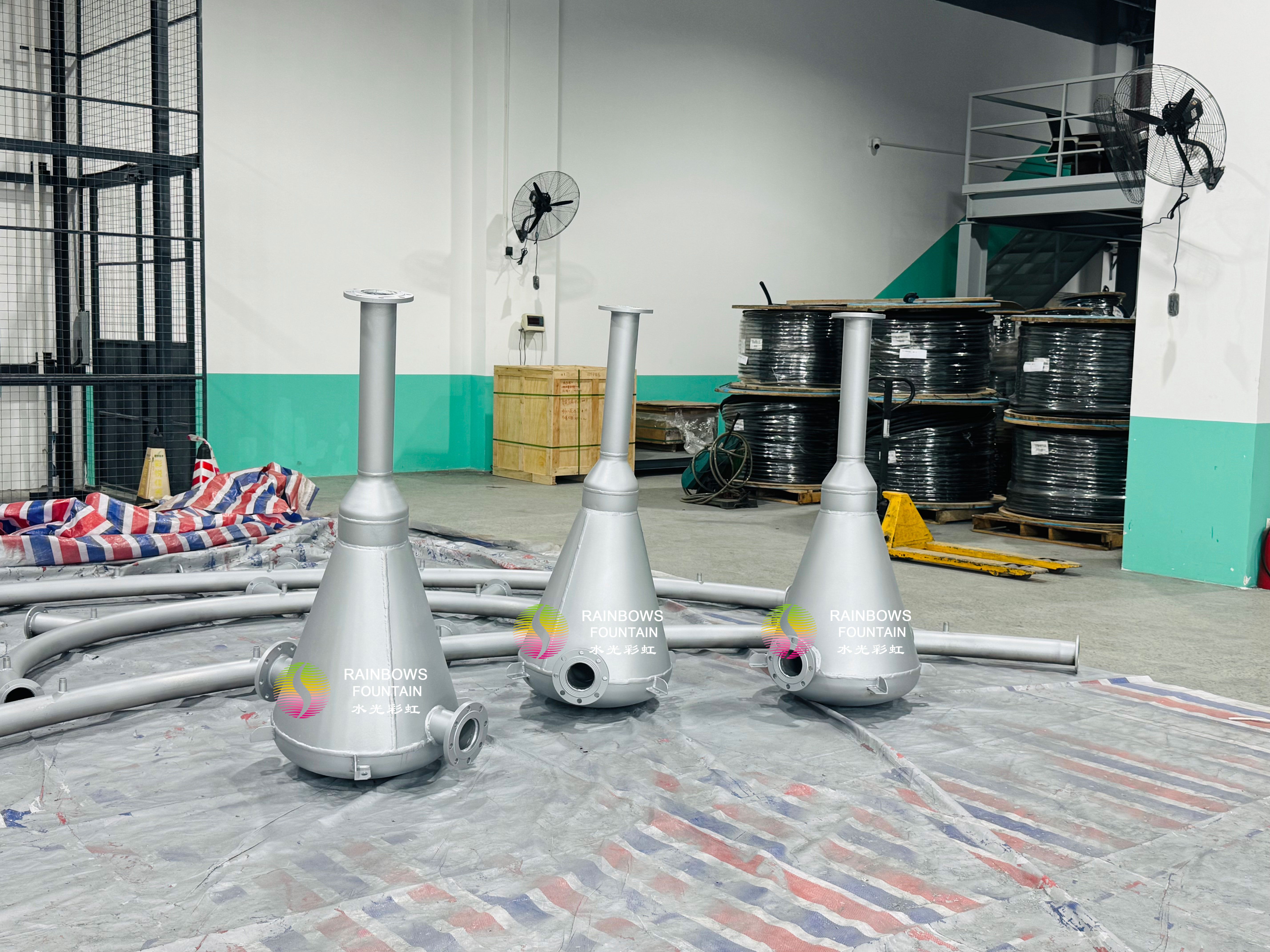
Custom-engineered nozzle assembly: every nozzle unit is produced to the project drawing rather than selected from a standard catalogue.
5. Audit the certification file, not the logo
Certificates must be produced as documents with a defined scope and validity period. Rainbows Fountain equipment is CE certified and manufactured under an ISO 9001 certified quality management system; underwater LED luminaires and pumps carry IP68 protection; ROHS and TUV certification appear in its project reference documentation. For export projects, IP68-rated underwater components and a quality system aligned with ISO 9001:2015 are baseline expectations, and the certificate scope should match the equipment being supplied.
6. Require factory pre-testing before shipment
This is the single highest-value risk control in the entire process. Rainbows Fountain tests fountain equipment in a factory demonstration pool before shipment, where engineers verify water patterns, nozzle performance, lighting synchronization and control programs so that each musical fountain operates as designed. Quality control includes 100% testing before loading, factory inspection, and third-party inspection through organizations such as SGS, TUV and INTEK. Ask for the test record for your system, and where practical attend the test or appoint an inspector to witness it.
7. Define on-site commissioning and handover
Commissioning is where installation quality becomes a working show. Rainbows Fountain provides overseas installation, commissioning, operator training, maintenance manuals and spare parts packages, backed by a 2-year warranty, free after-sales technical support and optional warranty and maintenance agreements that specify response times and spare-part strategy. The contract should state who travels, for how long, which show programming is handed over, how future show edits are delivered, and which spare parts remain on site after handover.
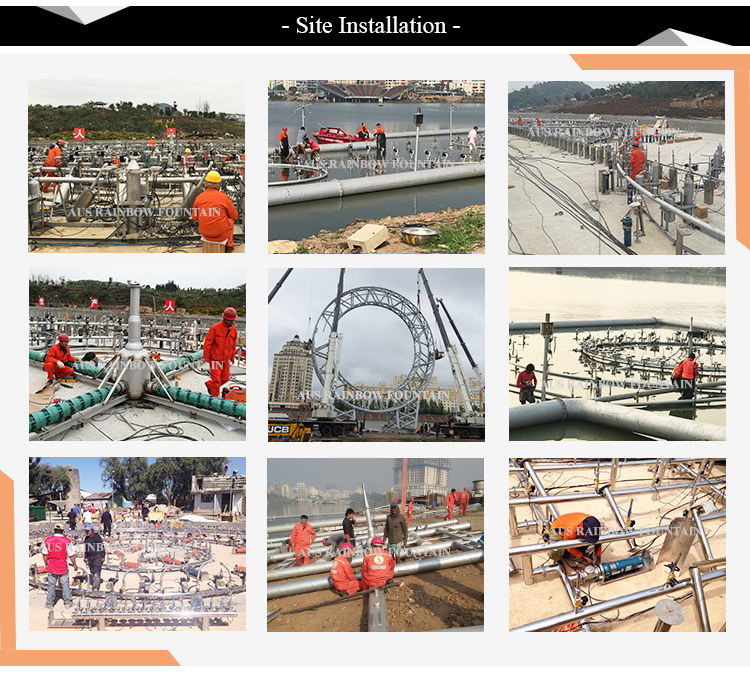
On-site stage: installation and commissioning support for all fountain types, with one-line technical support across the project lifecycle.
Matching the Audit to Your Project Scenario
The weight given to each checkpoint shifts with the venue. A hotel fountain and a lake floating water show fail for different reasons, so the audit emphasis should follow the site.
City square and dry-deck interactive fountains
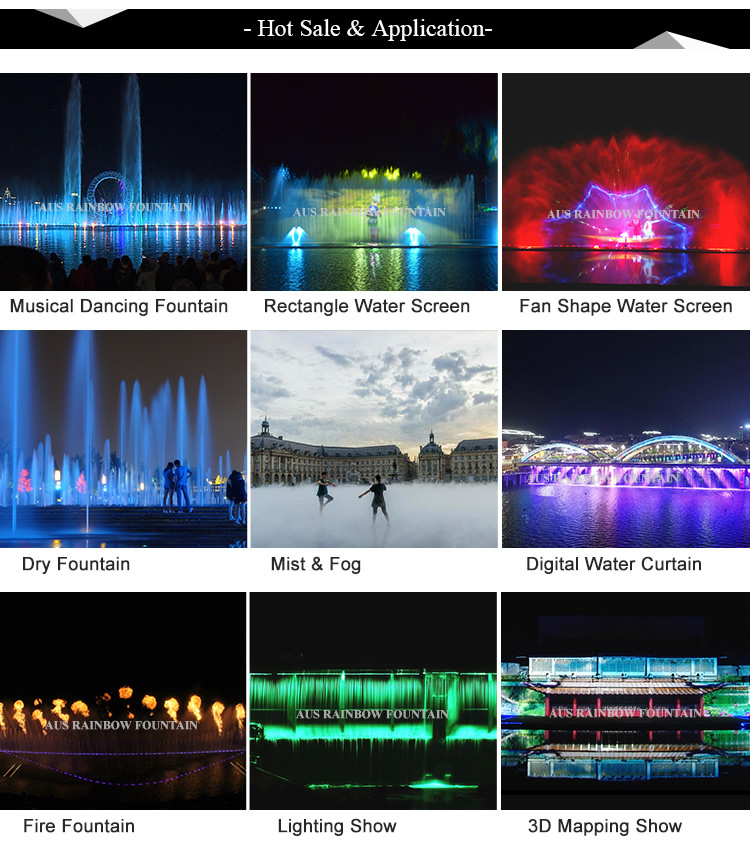
Public footfall is continuous, so public safety, drainage, surface finishing and programmable scheduling matter as much as visual impact. City square musical fountains are configured for urban plazas and civic landmarks using precision fountain technology, lighting and music synchronization, while dry deck interactive fountains place the entire system underground and allow visitors to interact with programmable water jets and synchronized lighting. Ask the manufacturer to confirm the interaction safety concept, the scheduled-run control mode and the maintenance access route before fabrication.
Lake and river floating fountains
Floating installations introduce environmental loads that land-based fountains never face. Anti-corrosion and saltwater treatment, floating lake structure design and waterproof electrical safety protection are standard special requirements. The Big O Show on the Ishim River in Astana, Kazakhstan, illustrates the scale involved: a floating O-shaped sculpture multimedia show combined with a large floating dancing water show, built with more than 2,000 pieces of DMX512 digital signal control equipment and more than 1,000 stainless steel pumps, with a water spray height above 100 m and combined water screen movie, laser, fire and music fountain performance. For this scenario, prioritize structural design review, anchoring, and service access before price negotiation.
Hotels, resorts and commercial landscapes
Hospitality and retail venues run shows on a fixed evening schedule, so reliability, noise control and architectural integration dominate. Commercial end-users including luxury hotels and shopping malls represented the largest share of musical fountain demand at 42.8% in 2025, which is why programmable show modes with scheduled runs — rather than continuous operation — are the standard configuration. Ask how show schedules, lighting levels and music are edited by venue staff after handover.
Water screen projection, laser and multimedia shows
Multimedia configurations combine water, light, laser and projection, which requires supporting equipment such as pumps, nozzles, valves, pipes, waterproof cables, DMX/PLC controllers, LED lights, laser lights, beam lights, water-screen projectors, audio systems, electrical cabinets, an IPC with control software, and a filtration system. Programming is customized to music rhythm, local culture, festival themes and branding requirements. Ask who authors the show content, how content updates are delivered after handover, and how the projection system is protected in outdoor conditions.
Stage, ceremony and seasonal event fountains
Event-driven projects compress engineering into weeks and often require annual re-programming. Reference points include the stage water fountain delivered by Rainbows Fountain for the opening ceremony of the 15th National Games of China within an extremely challenging project schedule, and the year-end and New Year water dance show delivered for two Brazilian cities since 2023, where design, equipment supply and annual upgrades have been handled by the same partner across consecutive seasons. For these projects, verify schedule control, spare-part availability and remote programming support as heavily as equipment specification.
Manufacturer Evaluation Scorecard
The table below converts the seven checkpoints into a request-and-verify format. Fill the last column with your own supplier's documented response.
| Evaluation checkpoint | What to request from the supplier | Evidence standard | Rainbows Fountain verified data point |
|---|---|---|---|
| Entity & references | Business licence, factory address, comparable project list, client contacts | Documented projects and repeat orders | Over 4,700 fountain projects in 50+ countries; repeat upgrades on Riyadh Season and Sheikh Zayed Festival projects |
| In-house design & engineering | CAD drawings, hydraulic layout, 3D effect simulation for your site | Project-specific deliverables, not generic animation | 45 engineers and 12 designers; CAD engineering drawings and 3D visual simulations before implementation |
| Production capacity | Facility size, headcount, annual output, production plan for your delivery window | Factory visit and written delivery plan | 4,500 m² facility, 51–80 employees, annual output of 50 units; lead time 15–45 days depending on scale and customization |
| Materials & component traceability | Stainless steel grade confirmation, component brand list, traceability records | Datasheets and certificates for key components | SS304 / SS316 / SS316L structures; ABB, Rexroth and Schneider key components |
| Certification & compliance | Certificates in document form with scope and validity | CE, ISO 9001, ROHS, TUV; IP68 for underwater components | CE certified equipment, ISO 9001 certified quality management system, IP68 underwater components |
| Pre-shipment testing | Test protocol, test record, invitation to witness testing | Factory pool test report and third-party inspection | Demonstration-pool testing of water patterns, nozzle performance, lighting synchronization and control programs; 100% testing before loading; SGS, TUV, INTEK inspection |
| Commissioning & after-sales | Commissioning scope, engineer deployment, training, warranty terms, spare parts | Scope written into the contract | Overseas engineering team of 20+ engineers; installation, commissioning, operator training, maintenance manuals and spare parts packages; 2-year warranty |
Typical specification reference for a custom musical fountain
| Structure material | AISI 304 stainless steel or 316 / 316L stainless steel |
| Control method | Music controller / DMX512 / programmable, with PLC intelligent linkage |
| Underwater protection | IP68 for underwater components |
| Lighting configuration | RGBW underwater LED, full-color laser, beam light |
| Nozzle lift range | 1 m – 100 m |
| Supported pump power | 1.5 kW – 110 kW |
| Power supply | 110 V – 450 V, 50 Hz – 60 Hz |
| Dimensions & nozzle diameter | Customized according to the site and determined by the final structural design |
| Minimum order quantity | 1 unit |
Frequently Asked Questions
What certifications should a musical fountain manufacturer hold for a city square project?
At minimum, the equipment should be CE certified and produced under an ISO 9001 certified quality management system, with underwater components such as LED lights and pumps rated IP68. Rainbows Fountain states that its fountain equipment is CE certified, manufactured under an ISO 9001 certified quality management system, and that ROHS and TUV certification appears in its project reference documentation, with key components traceable and compliant with international electrical and safety standards. Buyers should request certificates as documents with scope and validity rather than relying on logos in a brochure.
Can one manufacturer handle design, engineering, manufacturing and overseas installation?
Turnkey musical fountain suppliers can cover the full lifecycle: concept design, technical planning, equipment manufacturing, overseas installation and commissioning, and final delivery. Rainbows Fountain maintains an R&D and engineering team of 45 engineers and 12 designers that produces CAD engineering drawings and 3D visual simulations before implementation, plus an overseas engineering team of more than 20 engineers for on-site installation, commissioning, operator training, maintenance manuals and spare parts packages. Buyers should confirm that these functions are in-house rather than subcontracted to third parties.
What determines production capacity and lead time for a custom musical fountain?
Capacity and lead time depend on the manufacturer's facility, staffing and concurrent workload. Rainbows Fountain operates a 4,500 m² manufacturing facility with 51–80 employees and an annual output of 50 units, with a stated lead time of 15–45 days that varies with project scale and customization level and a minimum order quantity of 1 unit. Commercial scope is driven by site conditions, fountain type, nozzle and pump configuration, lighting and control specification, and shipping requirements rather than by a fixed catalogue price.
How can a buyer verify quality before the equipment is shipped?
Verification happens in three steps. First, factory testing: Rainbows Fountain tests equipment in a factory demonstration pool where engineers verify water patterns, nozzle performance, lighting synchronization and control programs. Second, quality control: 100% testing before loading, plus factory inspection. Third, independent verification: third-party inspection through organizations such as SGS, TUV and INTEK, either commissioned by the buyer or appointed directly. Clients visiting the factory can also review fountain nozzles, water effects and programmable performances in the demonstration pool before production.
What should on-site commissioning and after-sales support include?
Commissioning should define who travels to site, the installation and calibration scope, operator training, and the documentation handed over. Rainbows Fountain provides overseas installation, commissioning, on-site training and maintenance support, backed by a 2-year warranty, free after-sales technical support and long-term maintenance assistance and system upgrade services, with warranty and maintenance agreements available to specify response times and spare-part strategy. To request a project quotation, sample review or the full product catalogue for a city square, park, lake or hotel musical fountain project, contact the engineering team at rainbowsfountain@163.com or by WhatsApp at +8613631409487.
Conclusion: Verify First, Commission Once
A musical fountain is commissioned once and operated for years. The evaluation work that reduces the most risk happens in three places: inside the factory, in front of the test pool, and in the commissioning scope written into the contract. A manufacturer that can produce a factory address, an in-house engineering drawing set, a material and component list, current certificate files, a pre-shipment test record and a named on-site commissioning team has already answered most of the questions that decide project success. Everything else — the render, the slogan, the catalogue — is a proposal, not evidence.
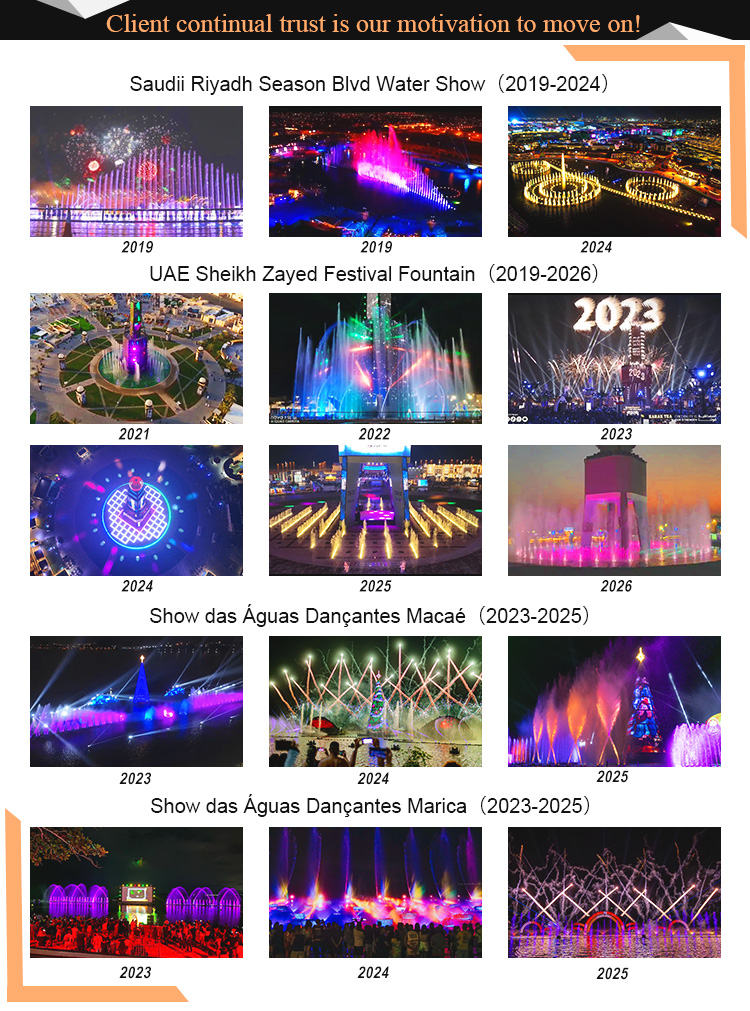
Repeat orders and multi-year upgrade mandates are the clearest available proof that a factory audit predicted real delivery performance.
Next step: review the engineering package before you shortlist
Download the 2026 Rainbows Fountain catalogue for fountain types, configurations and project references, or send your site drawings and show requirements for a technical proposal: 2026 Rainbows Fountain Catalogue (PDF)
Website: www.rainbowsfountain.com | WhatsApp: +8613631409487 | Email: rainbowsfountain@163.com
Have Questions or Need More Details?
Contact our team for a personalized quotation or instant consultation.
Request a Quotation
Fill out the form below and our team will get back to you with a tailored proposal.
WhatsApp Direct Chat
Prefer to chat in real-time? Message us on WhatsApp for instant assistance & quick answers.
- Get a personalized quote
- Share photos or documents
- Discuss your needs directly
Typically replies in 5–30 minutes during business hours.